Saturday, June 27, 2009

Hi all


Every sixty seconds you spend angry, upset or mad, is a full minute of happiness you'll never get back.. 


Message of the Day is: 

Life is short, Break the rules, Forgive quickly, Kiss slowly, Love truly, Laugh uncontrollably, And never regret anything that made you smile. 


Life may not to be the party we hoped for, but while we're here, we should dance!

Tuesday, June 16, 2009

pictures from physiotherapy world

paraffin wax for hand treatment

physical therapy by the Mountain Label.

Physiotherapy books

Physical Therapy by warryronin.


Physical Therapy by Ubi Caritas.
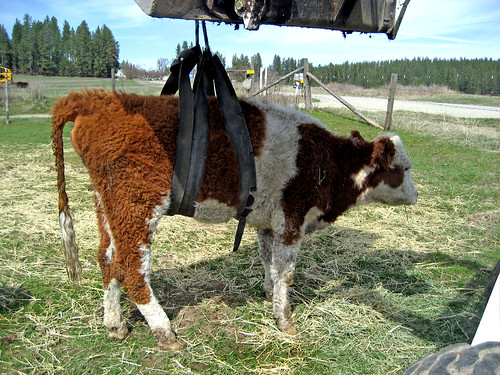
This little cow has calving paralysis, caused by the calf having been in the birth canal too long, putting pressure on the nerves of the spinal cord. She's re-learning how to walk.

Reeve041482 by otisarchives3.
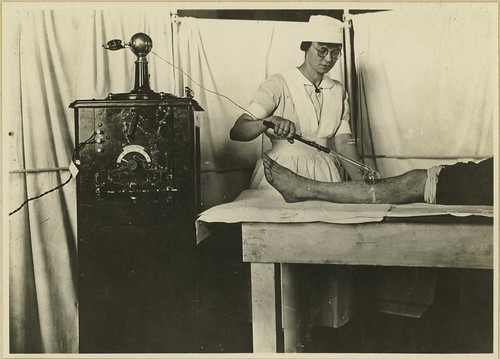
High frequency vacuum tube for peripheral stimulation. Use of electrical apparatus. [Physical therapy.] World War 1 era. Selected by Kathleen.

Monday, June 15, 2009

American College of Rheumatology diagnostic criteria for rheumatoid arthritis.


1. Morning stiffness
Morning stiffness in and around the joints lasting at least 1 hour.

2. Arthritis in three or more joint areas
Arthritis in three or more joint areas, involving the PIP, MCP, wrist,
elbow, knee, ankle or MTP joints on the right or left
Soft-tissue swelling or fluid (but not bony overgrowth) observed by a
physician, present simultaneously for at least 6 weeks

3. Arthritis of the hand joints
Swelling of wrist, MCP or hand joints for at least 6 weeks

4. Symmetrical arthritis
Simultaneous involvement of the same joint areas (defined in 2 above)
on both sides of the body (bilateral involvement of PIP, MCP or MTP
joints is acceptable without absolute symmetry) for at least 6 weeks

5. Rheumatoid nodules
Subcutaneous nodules over bony prominences, extensor surfaces or in
juxta-articular regions, observed by a physician.

6. Rheumatoid factor
Detected by a method positive in fewer than 5% of normal controls.

7. Radiographic changes
Typical of RA on posteroanterior hand and wrist radiographs
These must include erosions or unequivocal bony decalcification
localised in or most marked adjacent to the involved joints (OA
changes alone do not qualify)

Sunday, June 14, 2009

Wednesday, June 10, 2009

Medical Humor

Medical Record Blunders
Rectal exam revealed a normal size thyroid. (Long fingers?)

Between you and me, we ought to be able to get this lady pregnant.

The patient was in his usual state of good health until his airplane ran out of gas and crashed.

The lab test indicated abnormal lover function.

xam of genitalia was completely negative except for the right foot. (Anatomy review time!)

Jokes

A man goes to the doctor and says to the doctor:
"It hurts when I press here" (pressing his side)
"And when I press here" (pressing the other side)
"And here" (his leg)
"And here, here and here" (his other leg, and both arms)

So the doctor examined him all over and finally discovered what was wrong... "You've got a broken finger!

A Nurse Practitioner was examining his patient who happened to be hard of hearing. He put his stethoscope to her chest and said, "Big breaths."
The woman replied, "Yes, they used to be bigger!"

over


Tuesday, June 9, 2009

Mulligan Taping Techniques Inversion Ankle Sprain

BECOMING AN AUTONOMOUS PROFESSION

The Chartered Society of Physiotherapy was founded
in 1894, under the name of the Society of Trained
Masseuses. This section will not attempt to relate the
history of the profession except in the context of
developing autonomy. However, more about the early
days of the profession can be found in
Dr Jean Barclay's fascinating book In Good Hands
(Butterworth-Heinemann, 1994).
For many years, doctors governed the profession.
One of the first rules of professional conduct stated 'no
massage to be undertaken except under medical direction'
(Barclay 1994). Even in the 1960s doctors were
asserting that they must take full responsibility for
patients in their charge and 'professional and technical
staff have no right to challenge his views; only he is
equipped to decide how best to get the patients fit
again' (Barclay 1994). It is hard to believe now that it
took more than 80 years to escape the paternalism of
doctors, to whom physiotherapists were dependent for
referrals. The first breakthrough came in the early
1970s, when a report by the Remedial Professions
Committee, chaired by Professor Sir Ronald Tunbridge,
included a statement that while the doctor should
retain responsibility for prescribing treatment, more
scope in application and duration should be given to
therapists.
The McMillan report (DHSS 1973) went further, by
recommending that therapists should be allowed to
decide the nature and duration of treatment, although
doctors would remain responsible for the patient's welfare.
There was recognition that doctors who referred
patients would not be skilled in the detailed application
of particular techniques, and that the therapist would
therefore be able to operate more effectively if given
greater responsibility and freedom.
Eventually, a Health Circular called Relationship
between the Medical and Remedial Professions was
issued (DHSS 1977). This acknowledged the therapist's
competence and responsibility for deciding on the
nature of the treatment to be given. It recognised the
ability of the physiotherapist to determine the most appropriate intervention for a patient, based on knowledge
over and above that which it would be reasonable
to expect a doctor to possess. It also recognised the
close relationship between therapist and patient, and
the importance of the therapist interpreting and
adjusting treatment according to immediate patient
responses.
Autonomy was only achieved by being able to
demonstrate competence to make appropriate decisions,
building up the trust of doctors and those paying
for physiotherapy services. The need to acquire skills of
assessment and analysis became a key component of
student programmes from the 1970s. Today, qualifying
programmes stress even further the development of
skills, knowledge and attributes required for
autonomous practice.


Sunday, June 7, 2009

THE TOP 3 MYTHS & FACTS ABOUT NECK PAIN

Myth #1: Nonsteroidal Anti-inflammatory drugs (NSAIDs) are the best first line of action for individuals with neck pain.

On the contrary, the Cochrane Database reports there is NO evidence that NSAIDs are effective in the treatment of neck pain. (Pelso et al 2005)

Myth #2: Most patients with acute or chronic neck pain require general exercises for their recovery, there is no need for specific exercises provided by a Physical Therapist!

On the contrary, the Cochrane Review Board concludes that specific exercise therapy may be effective for the treatment of acute and chronic neck pain, with or without headache. (Kay et al 2005)

Myth #3: Education on home exercises is as effective as supervised exercises provided by a Physical Therapist.

On the contrary, several randomized controlled trials (RCTs) provide evidence that unsupervised home programs are not as beneficial for individuals with chronic mechanical neck pain or for neck pain with radiculopathy. (Gross et al 2007 & Gross et al 2009)

On the contrary, several randomized controlled trials (RCTs) provide evidence that unsupervised home programs are not as beneficial for individuals with chronic mechanical neck pain or for neck pain with radiculopathy. (Gross et al 2007 & Gross et al 2009)

Is it not amazing that with no evidence, NSAIDs continues to be the primary line of defense for neck pain ... yet having significant evidence, Physical Therapy is often not recommended?

We must pass these studies on to other health care providers.

For more references, Myths & Facts please visit the complimentary APTEI Clinical Library at
http://aptei.com/library/index.jsp