Thursday, September 24, 2009

Med students Twittering secrets

By Sheilah Downey

"Don't be deceived by the sense of anonymity the Internet fosters," cautions workplace legal expert Robin Bond, and it may be the best legal advice for this age gone-a-Twitter.

Three medical students were fired and 76 percent of students were warned for posting unprofessional material on the Internet, according to a study published today in the Journal of the American Medical Association.

In the anonymous survey, sent to schools in the Association of American Medical Colleges, 60 percent of the deans reported incidents of students posting unprofessional content online.

Violations of patient confidentiality were reported by 13 percent of the college deans responding to the electronic survey from the Washington VA Medical Center.
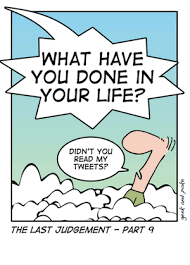

Only 38 percent of the medical schools said they had a policy in place to "cover student-posted online content," and 11 percent said they were developing new policies to stop the Internet chatter from repeating, according to the study.

In addition to sharing patient secrets, more than 50 percent of the students were shown using profanity online, 48 percent were using discriminatory language, 39 percent were drunk online, and 38 percent were shown in sexually suggestive material, the study said.


It isn't known if the med students were blogging in their Internet infractions, but Bond says with more than 27 percent of users reading blogs, they become "virtual diaries," according to an article in BusinessWire.

"Writing a blog is the online equivalent of publishing your opinions in the local paper," Bond said. "Laws of libel, slander and defamation of character do apply."

In September of 2005, 27 employees of Auto Club of California were fired for blogging about fellow employees, in articles criticizing them about their weight and other lifestyle factors.


Monday, September 14, 2009

Combination of traditional, alternative medicine popular

DAMIEN WOOD - Herald-Tribune

Grande Prairie’s first annual Health and Wellness gave visitors what it seems is exactly what they wanted – lots of different options under one roof.

The Evergreen Park TEC Centre pulled in around 3,000 people to check out 90 exhibitors over the course of the weekend.

Doctors, pharmacists, nurses, dietitians, personal trainers, practitioners of alternative medicine and quite a few others all got attention from visitors – some just wandering and some with very specific questions.


“I just think it’s nice to see what perhaps is available to us locally, or even just something to do on your own to look after your own health,” said Carolyn Riha.

“You’ve got options of doing whatever you want – options on getting better. (There is) a lot of new stuff and new ways to do things,” said Shawn Sutherland.

Show producer Jenny Kachkar said people’s interest could be because of the current state of healthcare, with doctor shortages being what they are, but also the age of information.

“I think with the world of the Internet and accessibility to electronic media, people are really taking the initiative to find their research. They are still going to their doctors ... but figure out their own way that’s going to give you the right remedy or what’s going to best suit your personal lifestyle,” she said.

“We go to the doctor when we need to, but if it’s something that we can do at home we’re not putting lag on the system by hanging out in the emergency room for a cold,” said Cori Lester.

Registered dietitian and certified diabetes educator Karie Quinn said people are possibly “waking up.”

“They’re starting to really respond to ‘what can I do?’ as opposed to ‘somebody else help me, somebody else treat me,’” she said.

“It may be as simple as our lifestyle. Many, many chronic diseases – not all of them, but many chronic diseases – can be assisted and maybe even prevented or delayed just simply by moving more and eating maybe a little less in portioning.”

Nutrition seemed to be a popular topic at the show. Sutherland found himself at one juice exhibitor to find something better than the rest.

Lester’s husband, Lawrence, left with juice under his arm.

Demonstrations of healthy eating on the main stage by cooks from Jax Grill and Lounge and Moxie’s Classic Grill pulled in some of the bigger audiences with free samples.

Quinn, who also presented at the show, said the weekend has been a bit of a dream to her as she has a background in both traditional and alternative medicine.

She is glad to see it all under one roof.

“You cannot give one individual the same message that you give to the next,” she said.

“At first glance, I think people are expecting to see (traditional) types of information. But they’re coming in – pleasantly, I think – thinking ‘hey, it can all work.’”

Friday, September 11, 2009

The Whole Truth About Milk

Milk and milk products have been the food staple of mankind since the beginning of recorded history. They are truly the one food source that has allowed us to become civilized and to develop societies as we know them today.


But now, milk has a bad name. Is it the milk itself or is it the way that it is being processed and delivered in this corporate farming world we now live in? Are the problems we see a result of pasteurizing and homogenizing, which are relatively new developments in the history of milk?


Thursday, September 10, 2009

Wednesday, September 9, 2009

Amar Jyoti Presentation

From the cycle rickshaw to a barrier free bus fitted with hydraulic lift, from under a tree to a regular school; sitting on durries and playing in the grass to now having regular furniture designed with special needs and good play grounds; from a barsati as an office to an institution based centre with two barrier-free buildings in Delhi and a branch in Gwalior; from paper flutes to a regular orchestra and band; from handwritten annual report to printed publications; from knitting needles to knitting machines; from hand-and foot stitching machines to electrically operated stitching; from organizing National Integrated Sports to 6th International Abilympics is an exceptional journey. As trail-blazer in innovations and Human Resources Development, Amar Jyoti has received several national and international awards.

i use to work there from 1994-1996 great time.

see the

Amar Jyoti Presentation


Wednesday, September 2, 2009

THE VACCINE EXPERIMENT - In The Service of Good

The Vaccine Experiment features three professors of medicine expressing grave concerns about the vaccine and an alleged cover-up of adverse reactions. They reveal their total dismay on learning the Norwegian results were used to justify the vaccination of a million otherwise healthy New Zealand children.

Two Norwegian children seriously disabled by the vaccine are also profiled. The documentary team came to New Zealand and interviewed New Zealand health officials who deny that New Zealand has suffered any adverse events associated with the MeNZB vaccine. They then speak with the families of local children seriously injured by the vaccine.

Revealingly, the team captures New Zealand health official Dr Jane O'Hallahan making false claims and backtracking on camera when confronted with the truth.

There is no doubt serious pressure will be brought to bear from MeNZB proponents to either can the documentary or to seriously edit it.

We ask that all New Zealanders who wish to see this documentary in its entirety contact TVNZ to support them in their intention to screen.

"THE VACCINE EXPERIMENT - In The Service of Good" will be one of the most important documentaries to screen on television this year.


see the rest on youtube.com

Tuesday, September 1, 2009

neck massage the long session

I liked the way he is doing it
see with me


Intradiscal Electrothermal Annuloplasty

Practically everyone suffers from back pain at some point. Sometimes the pain results from pressure on nerves, sometimes from spinal fractures, and sometimes from problems with the cushioning discs that separate the bones of the spine. Depending on the cause of the pain, treatment can be as simple as rest and exercise, or as complex as major surgery. Usually, simpler methods are tried first; if they are not successful in relieving the pain, more aggressive treatments can be used.

A relatively new treatment for back pain resulting from problems within the cushioning discs is intradiscal electrothermal annuloplasty, also called intradiscal electrothermal therapy (IDET). This outpatient procedure applies high heat directly to the inside of the disc. It is a less expensive and less invasive procedure than spinal surgery, but it is not appropriate for everyone who has low back pain.

Disc anatomy

Discs are cushioning tissues located between each vertebra of the spine. The disc has a soft center (nucleus) surrounded by tougher ligament tissue (annulus). As we age, the outer ligament tissue begins to fray and tear from use or injury. This allows nerves and small blood vessels from the soft center to seep into the injury site, triggering pain receptors in the ligament tissue. The result is discogenic back pain.

Discogenic pain differs from a ruptured or herniated disc because the pain originates within the disc and does not come from nerves or other structures. Discogenic pain is confined to the back and does not radiate down the legs.

Diagnosis

In addition to interviewing you about the pain, the physician will take your medical history and give you a physical examination. Tests that can help determine the source of the pain include X-rays, magnetic resonance imaging (MRI), computed tomography (CT) scans and discography.

Discography is used to identify the painful disc. In this test, the physician pierces the disc with a thin needle and injects a contrast dye. X-rays show whether the dye enters the disc's outer tissues. Discography is called a provocative test because it will provoke pain in an injured disc.

IDET

IDET is usually reserved only for patients who have tried aggressive, non-operative techniques to relieve their pain without success. Because this is a relatively new procedure, you should make sure that the practitioner you see is adequately trained in using the equipment. The procedure itself takes about one hour to complete. A local anesthetic and intravenous pain relievers are used.

  • The physician uses an X-ray machine (fluoroscope) to see the spinal structures.
  • A hollow needle is inserted into the painful disc. A thin heating wire (electrothermal catheter) is passed through the needle into the disc, and maneuvered into place around the outer edge of the central nucleus.

  • The wire is heated slowly to a temperature of about 194 degrees Farenheit (90 degrees Celsius) for about 15 minutes.

    Heat can potentially contract and shrink the fibers that make up the disc wall, closing any tears.

    The heat can also potentially cauterize (burn) tiny nerve endings in the disc, making them less sensitive to pain.

  • After the wire and needle are removed, there is a short observation period before the patient is released.

Postoperative treatment

Although IDET is much less invasive than most back surgeries, it will still take several weeks for healing to occur. Pain relief is not immediate; pain may actually increase for a day or two after surgery. But gradually the pain from the procedure itself should diminish.

After the IDET procedure, you will need to rest for a few days and limit the time you spend sitting. You may need to wear a back support for several weeks. You will also need to participate in a physical therapy program. If your job is sedentary does not involve lifting or manual labor, you may be able to return to work in a week or so; otherwise it may be several months before you can resume your activities. You will not be able to participate in rigorous recreational activity or do any heavy lifting or twisting for at least six months after the procedure.

IDET is not recommended if you have severe disc degeneration, nerve compression, spinal instability and/or narrowing of the spinal column (spinal stenosis). IDET is not yet covered by many insurance plans.

The long-term results of this procedure are still unknown. IDET was introduced in 1997 and case series without controls have reported encouraging results. However, these results need to be confirmed in prospective, randomized trials. Additionally, there is debate about how the procedure actually works. Not every patient will benefit from IDET treatment. Some patients continue to experience back pain and may eventually have other surgical procedures.


by Dr.Venketa Krishnan