Thursday, November 26, 2009

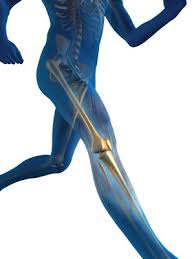
I like this picture


La espera
Created by Jorge Suarez of Argentina, using Lightwave 9.6, which has the latest technology nodes (FAST SKIN).

Wednesday, November 25, 2009

Garlic Pickle Recipes

Korean Pickled Garlic

For some people this was the favouite pickle at the testing and for others the garlic was overwhelmed by the soy flavour. Tim sent us this recipe which he found on the Vessey & Company website and used with great success. We made it with peeled garlic cloves and that worked well.

  • 1 quart unpeeled garlic cloves
  • 1 cup vinegar
  • 4 cups soy sauce
  • 2/3 cup sugar

Procedure:

  1. Place garlic in a jar. Add vinegar and enough water to cover garlic. The cloves must be fully covered, not floating on top.
  2. Close jar and let stand for one week, then drain.
  3. Boil the soy sauce and sugar for 10 minutes. Set aside to cool.
  4. Pour cooled soy mixture over garlic and seal jar.

The garlic will be ready to eat in 3 weeks. To eat, bite or cut the tips from the cloves, and suck out the meat. If the skins are tender, you can eat the whole thing. The younger the garlic, the more tender the skins.
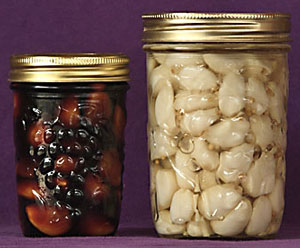
Korean Pickles - left
"The Garlic News" Pickles - right

"The Garlic News" Pickled Garlic

This recipe was given by Audrey to garlic guru Paul Pospisil and he says it is the best he has come across. All the taste testers liked it. A nice, crisp pickle. It is an excellent vehicle for showcasing the different garlics. We made it without the optional spices. Baba Franchuk’s made an excellent, flavourful pickle with this recipe. Some of the milder garlics were considered a bit bland.

  • 2 cups peeled garlic cloves
  • 1/4 cup sugar
  • 1 cup vinegar
  • 1 1/2 teaspoons salt
  • 1/2 teaspoon mustard seed
  • 1 bay leaf or whole cloves or picling spices (optional)

Bring all ingredients to a boil in a pot. Cook one minute. Put in covered jar and refrigerate 24 hours.


Pickled Garlic with Red Pepper

A mild pickle, very pretty. Those who prefer mild pickles loved it and those who were looking for a stronger, more garlicky flavour found it uninteresting.

  • 1/2 lb peeled garlic cloves
  • 1 large fresh sweet red bell pepper, seeded and slivered
  • 2 cups white vinegar
  • 2/3 cup white sugar
  • 1/2 teaspoon mustard seed
  • 1/2 tsp celery seed

Peel garlic. Leave small cloves whole. Cut large cloves in half. Combine with red pepper.

Measure vinegar and sugar into saucepan. If desired, place mustard seed and celery seed in cotton bag and put in saucepan. May also be left loose. Heat on medium-high, stirring frequently, until it boils. Simmer for about 5 minutes. Add garlic and red pepper. Return to boil and boil 3 more minutes. Discard spice bag. Fill hot, sterilized jars with red peppers and garlic to within 1 inch of top. Fill with hot brine to 1/4 inch of top. Seal.

Let stand several weeks before serving. If not sealed, keep in the fridge.

from

http://www.garlicfarm.ca/

Sunday, November 1, 2009

Fact - The principle of all physical therapy is to improve the blood and nerve supply to the affected area.

A study published on 2nd May 2005 demonstrates that acupuncture is a lot more than just a placebo treatment and can genuinely play a big part in relieving pain. The World Health Organisation has listed some 40 diseases that can be successfully treated with acupuncture, including muscular, skeletal and nerve pain, breathing difficulties, digestive problems, disorders of the nervous system, depression and painful menstruation.


Acupuncture is a drug-free way to relieve pain and is surprisingly relaxing. The insertion of fine acupuncture needles is usually painless. If you are needle-phobic, there are other ways to stimulate the acu-points - electricity, heat, laser or fingertip pressure can be used. As it is so gentle, acupuncture is an ideal treatment choice for the elderly.

The Chinese believe that good health is to be regarded as a state of energy balance within the body. In traditional Chinese medicine, it is believed that an energy called 'chi', flows along invisible energy channels called 'meridians' which are believed to be linked to internal organs. Sticking needles in particular points along these meridians is believed to increase or decrease the flow of energy. A balance has to be kept between two opposing yet complementary natural forces called 'yin' (female) and 'yang' (male). The aim of Chinese medicine is to correct any imbalance in these forces, since this is the cause of disharmony and disease, and to allow the body's natural healing mechanisms to do the rest. Yin force is seen as being passive, tranquil and represents darkness, coldness, moisture and swelling. Yang force is seen as being aggressive and stimulating and represents light, heat, dryness and contraction.


This ancient method of Chinese medicine relaxes the nervous system by controlling central pain pathways. It also promotes the release of the body's own pain relieving hormones (endorphins). Endorphins have almost the same chemical structure as morphine, hence acupuncture being so effective for any condition that has pain and stress related to it. Today there is more scientific understanding of how acupuncture works. Not only have the endorphins and pain blocking mechanisms of acupuncture been proven, but also it is a fantastic way to stimulate circulation to a particular area.


One of the principals of acupuncture is to improve the blood supply to the area of pain. Acupuncture works because a needle is perceived by the body as something foreign (literally a foreign body) and the body's defence system sends an increase of blood supply to fight off potential infection. In so doing the area is engorged with blood. With the increase of blood supply toxic build up in the muscle tissue can be flushed through and eliminated. Nowadays, disposable needles are used to ease the fears of cross-infection.