Tuesday, July 21, 2009
Respiratory Basic Physical Examination
how did he managed to assess pulse and respiratory rate without even wearing a watch?
Tuesday, July 14, 2009
How did acupuncture become popular in the USA?
James Reston, who worked for the New York Times had his appendix removed (appendectomy) during a visit to China in 1971. After surgery he experienced some discomfort and was treated for this with acupuncture. He was surprised to find that the acupuncture treatment helped his discomfort tremendously. He subsequently wrote an article that year titled "Now, About My Operation in Peking". Many believe this article triggered intense interest in acupuncture in the USA. Reston wrote that the acupuncturist "inserted three long, thin needles into the outer part of my right elbow and below my knees and manipulated them…That sent ripples of pain racing through my limbs and, at least, had the effect of diverting my attention from the distress in my stomach. Meanwhile, Doctor Li lit two pieces of an herb called ai, which looked like the burning stumps of a broken cheap cigar, and held them close to my abdomen while occasionally twirling the needles into action. All of this took about 20 minutes, during which I remembered thinking that it was rather a complicated way to get rid of gas… but there was a noticeable relaxation of the pressure and distension within an hour and no recurrence of the problem thereafter."
However, a search in The New York Times shows that acupuncture was first reported in 1854, and about once yearly until 1971.
The patient will be asked to lie down, either face-up, face-down or on his/her side, depending on where the needless are inserted. The acupuncturist should use single-use disposable sterile needles. As each needle is inserted the patient should feel them, but initially without pain. However, when the needle reaches the right depth there should be a deep aching sensation. Sometimes the needles are heated or stimulated with electricity after insertion. Once inserted, the needles will remain there for about twenty minutes.

In Western societies and several other parts of the world, acupuncture is explained including concepts of neuroscience. Acupuncture points are seen by Western practitioners as places where nerves, muscles and connective tissue can be stimulated. Acupuncture practitioners say that the stimulation increases bloodflow while at the same time triggering the activity of our own body's natural painkillers.
However, a search in The New York Times shows that acupuncture was first reported in 1854, and about once yearly until 1971.

How is acupuncture treatment done?
Acupuncture generally involves several weekly or fortnightly treatments. Most courses consist of up to 12 sessions. A visit to an acupuncturist will involve an exam and an assessment of the patient's condition, the insertion of needles, and advice on self-care. Most sessions last about 30 minutes.The patient will be asked to lie down, either face-up, face-down or on his/her side, depending on where the needless are inserted. The acupuncturist should use single-use disposable sterile needles. As each needle is inserted the patient should feel them, but initially without pain. However, when the needle reaches the right depth there should be a deep aching sensation. Sometimes the needles are heated or stimulated with electricity after insertion. Once inserted, the needles will remain there for about twenty minutes.

How does acupuncture work?
Traditional Chinese medicine explains that health is the result of a harmonious balance of the complementary extremes of yin and yan of the life force known as gior chi. Qi is said to flow through meridians (pathways) in the human body. Through 350 acupuncture points in the body, these meridians and energy flows may be accessed. Illness is said to be the consequence of an imbalance of the forces. If needles are inserted into these points with appropriate combinations it is said that the energy flow can be brought back into proper balance.
In Western societies and several other parts of the world, acupuncture is explained including concepts of neuroscience. Acupuncture points are seen by Western practitioners as places where nerves, muscles and connective tissue can be stimulated. Acupuncture practitioners say that the stimulation increases bloodflow while at the same time triggering the activity of our own body's natural painkillers.

Saturday, July 4, 2009
Immediate Tendonitis Relief Following Rotator Cuff Treatment
A minimally invasive procedure to treat tendonitis in the rotator cuff of the shoulder provides immediate symptom relief to the patient, according to a study published in the July issue of Radiology. The study found that ultrasound-guided nonsurgical therapy significantly reduces pain from calcific tendonitis of the rotator cuff and restores lasting mobility after treatment. 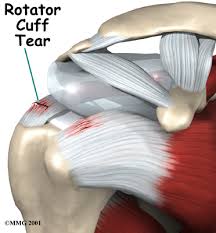
"With this treatment, we were able to establish a single inexpensive and effective treatment for calcific tendonitis of the rotator cuff. This has never happened before," said co-author Luca M. Sconfienza, M.D., from the Unit of Radiology, IRCCS Policlinico San Donato, University of Milan School of Medicine in Milan, Italy. "Symptoms improved in patients treated with our procedure compared to non-treated patients."
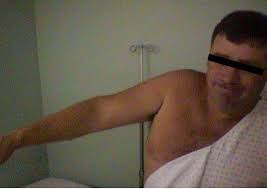
Calcific tendonitis is a condition that causes the formation of small calcium deposits within the tendons of the rotator cuff in the shoulder. It is most common in adults in their 40s. In most cases, the deposits become painful and can restrict mobility of the shoulder. In minor cases, physical therapy or anti-inflammatory medications may be sufficient to address the problem until the calcifications break apart spontaneously. In severe cases, patients may require shockwave treatment or open surgery to remove the calcium. Open surgery requires a hospital stay and rehabilitation and, on rare occasions, may result in major complications, such as tendon rupture. 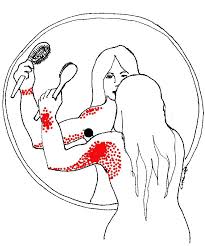
"This treatment could completely replace other treatments that are affected by several limitations and complications," Dr. Sconfienza said.
Ultrasound-guided percutaneous (through the skin) therapy represents an effective and inexpensive alternative to surgery that is less stressful for the patient. For the 20-minute procedure, the shoulder is anesthetized and, with ultrasound guidance, a radiologist injects a saline solution into the rotator cuff to wash the area and break up the calcium. A second needle is used to aspirate, or withdraw, the calcium residue. Recovery time is about an hour.
"People with calcific tendonitis should know that with a simple, one-time ultrasound-guided procedure, they could recover completely from the terrible pain constantly affecting their shoulder," Dr. Sconfienza said.
For the study, Dr. Sconfienza, senior author Giovanni Serafini, M.D., from the radiology unit at Santa Corona Hospital in Pietra Ligure, Italy, and colleagues used ultrasound-guided percutaneous therapy to treat 235 shoulders in 133 women and 86 men (mean age 42) with calcific tendonitis. An additional 68 patients (31 men and 37 women) did not receive treatment and acted as a control group. All of the patients had shoulder pain that was unresponsive to previous medical treatment. Follow-up was conducted after 1 month, 3 months, 1 year, 5 years and 10 years.
The results showed that treated patients exhibited a considerable reduction in pain and significant improvement to mobility of the affected limb after 1 month, 3 months and 1 year compared to non-treated patients. Five and 10 years after the procedure, the condition of non-treated patients had improved to the point that reported outcomes were similar to those of the treated group.
While few institutions currently offer this therapy, Dr. Sconfienza says that, theoretically, the procedure could be performed in any hospital or clinic that has ultrasound equipment with a superficial probe.
"There are millions of people in the world affected by calcific tendonitis," Dr. Sconfienza said. "This treatment can provide quick and inexpensive relief for all of them."
"Rotator Cuff Calcific Tendonitis: Short-term and 10-year Outcomes after Two-Needle US-guided Percutaneous Treatment: Nonrandomized Controlled Trial." Collaborating with Drs. Serafini and Sconfienza were Francesca Lacelli, M.D., Enzo Silvestri, M.D., Alberto Aliprandi, M.D., and Francesco Sardanelli, M.D.
Source:
Linda Brooks
Radiological Society of North America

"With this treatment, we were able to establish a single inexpensive and effective treatment for calcific tendonitis of the rotator cuff. This has never happened before," said co-author Luca M. Sconfienza, M.D., from the Unit of Radiology, IRCCS Policlinico San Donato, University of Milan School of Medicine in Milan, Italy. "Symptoms improved in patients treated with our procedure compared to non-treated patients."
Calcific tendonitis is a condition that causes the formation of small calcium deposits within the tendons of the rotator cuff in the shoulder. It is most common in adults in their 40s. In most cases, the deposits become painful and can restrict mobility of the shoulder. In minor cases, physical therapy or anti-inflammatory medications may be sufficient to address the problem until the calcifications break apart spontaneously. In severe cases, patients may require shockwave treatment or open surgery to remove the calcium. Open surgery requires a hospital stay and rehabilitation and, on rare occasions, may result in major complications, such as tendon rupture.

"This treatment could completely replace other treatments that are affected by several limitations and complications," Dr. Sconfienza said.
Ultrasound-guided percutaneous (through the skin) therapy represents an effective and inexpensive alternative to surgery that is less stressful for the patient. For the 20-minute procedure, the shoulder is anesthetized and, with ultrasound guidance, a radiologist injects a saline solution into the rotator cuff to wash the area and break up the calcium. A second needle is used to aspirate, or withdraw, the calcium residue. Recovery time is about an hour.
"People with calcific tendonitis should know that with a simple, one-time ultrasound-guided procedure, they could recover completely from the terrible pain constantly affecting their shoulder," Dr. Sconfienza said.
For the study, Dr. Sconfienza, senior author Giovanni Serafini, M.D., from the radiology unit at Santa Corona Hospital in Pietra Ligure, Italy, and colleagues used ultrasound-guided percutaneous therapy to treat 235 shoulders in 133 women and 86 men (mean age 42) with calcific tendonitis. An additional 68 patients (31 men and 37 women) did not receive treatment and acted as a control group. All of the patients had shoulder pain that was unresponsive to previous medical treatment. Follow-up was conducted after 1 month, 3 months, 1 year, 5 years and 10 years.
The results showed that treated patients exhibited a considerable reduction in pain and significant improvement to mobility of the affected limb after 1 month, 3 months and 1 year compared to non-treated patients. Five and 10 years after the procedure, the condition of non-treated patients had improved to the point that reported outcomes were similar to those of the treated group.
While few institutions currently offer this therapy, Dr. Sconfienza says that, theoretically, the procedure could be performed in any hospital or clinic that has ultrasound equipment with a superficial probe.
"There are millions of people in the world affected by calcific tendonitis," Dr. Sconfienza said. "This treatment can provide quick and inexpensive relief for all of them."

"Rotator Cuff Calcific Tendonitis: Short-term and 10-year Outcomes after Two-Needle US-guided Percutaneous Treatment: Nonrandomized Controlled Trial." Collaborating with Drs. Serafini and Sconfienza were Francesca Lacelli, M.D., Enzo Silvestri, M.D., Alberto Aliprandi, M.D., and Francesco Sardanelli, M.D.
Source:
Linda Brooks
Radiological Society of North America
Subscribe to:
Posts (Atom)